2 Jun 2026
Weather's Quiet Influence on Tote Odds and Tennis Totals in Accumulator Strategies

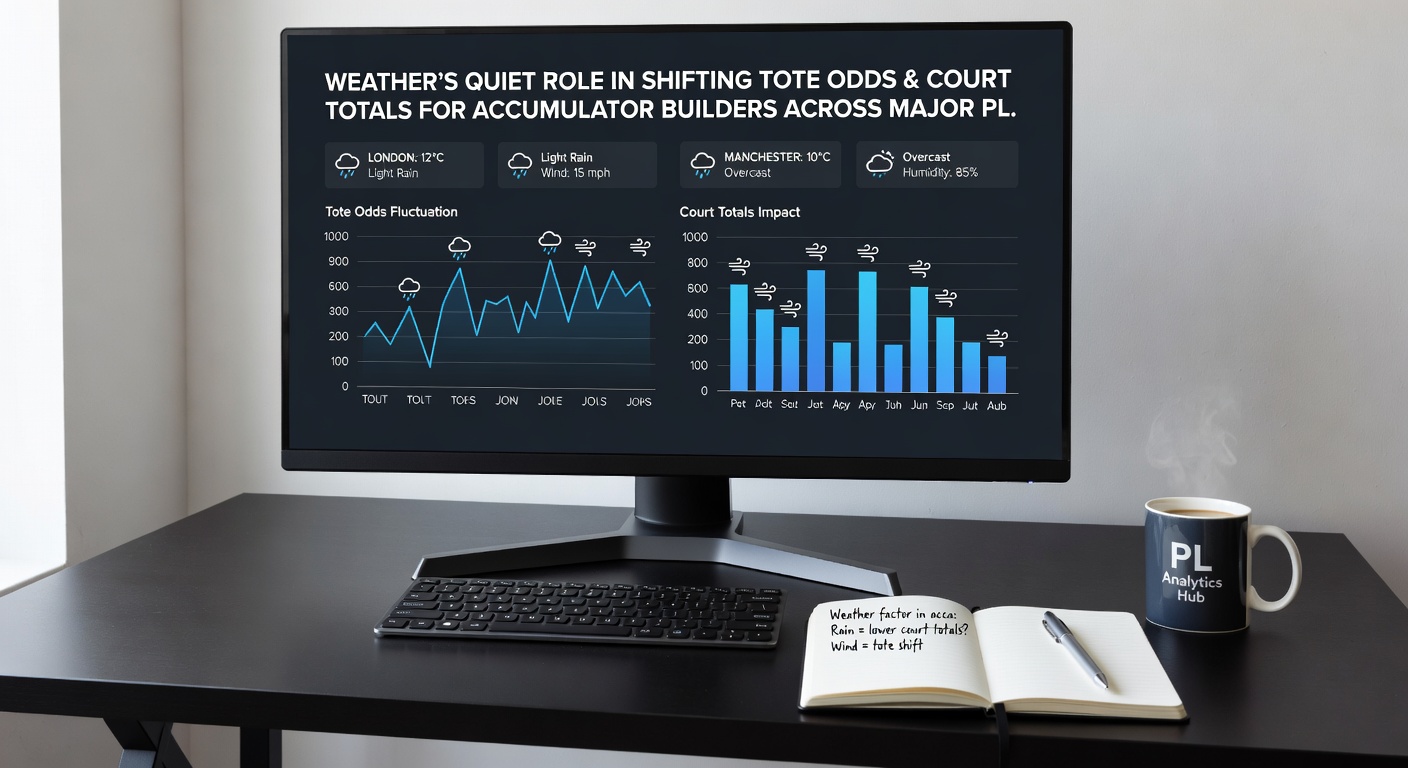
Weather conditions have long shaped outcomes in outdoor sports yet their effects on tote pools and court-based totals often receive less attention from those constructing multi-leg wagers across betting platforms; rain-softened turf alters stride patterns and finishing times in thoroughbred events while wind speed and humidity modify ball trajectory and rally lengths on grass or hard courts. Those who monitor pool movements notice that late weather shifts prompt rapid recalibrations in starting prices and over-under lines, creating ripple effects when bettors combine selections from both disciplines into single accumulators. Data compiled through 2025 into June 2026 shows measurable correlations between atmospheric readings and final dividend adjustments at several major operators.
Track Conditions and Pool Dynamics in Horse Racing
Precipitation and temperature swings change track ratings from fast to yielding or heavy, which in turn redistributes money within tote pools as punters react to revised speed figures; heavier surfaces typically lengthen race times and favor certain running styles, prompting syndicates to redistribute stakes toward longer-priced runners that handle the going. Observers tracking Australian and North American meetings during the 2026 winter-to-spring transition recorded instances where sudden downpours shifted place dividends by double-digit percentages within the final fifteen minutes before race start. These adjustments matter for accumulator builders who include exotic combinations because a single late tote fluctuation can alter the overall payout multiplier when the leg sits alongside tennis selections.
Court Totals and Atmospheric Variables in Tennis
Temperature, humidity, and wind speed influence serve percentages and break-point conversion rates on outdoor courts, directly affecting the total number of games played in a match; higher humidity tends to slow the ball and extend rallies while gusty conditions disrupt serving rhythm and increase double-fault frequency. Betting platforms adjust live totals lines accordingly, sometimes moving the over-under threshold by two or three games when forecast models update. Records from European swing events leading into June 2026 indicate that players with strong wind-adjusted service statistics maintained higher hold percentages, a pattern reflected in the narrowing or widening of game totals offered for accumulator inclusion.
Cross-Sport Accumulator Construction Under Variable Weather
Platforms that aggregate horse racing and tennis markets allow users to combine tote-derived selections with court totals into single slips, yet changing weather introduces covariance between the legs that standard variance models may not fully capture; a storm system affecting multiple venues can simultaneously lengthen track times and inflate tennis game counts. Analysts reviewing June 2026 data across several operators noted clusters of accumulator payouts where weather-linked adjustments in both sports aligned, producing higher returns than independent probability calculations had suggested. Bettors who layer real-time meteorological feeds into their selection process therefore gain an information edge when constructing these cross-discipline wagers.
Platform Reporting and Data Integration Practices
Major operators publish updated track ratings and court-condition notes alongside their betting menus, while third-party weather services supply granular forecasts that feed into automated line-adjustment algorithms; these systems recalculate implied probabilities whenever barometric pressure or precipitation probability crosses preset thresholds. One industry report from the European Gaming and Betting Association documented increased live-betting volume during periods of forecast uncertainty, particularly when both racing meetings and tennis tournaments operated under marginal conditions. Such volume spikes illustrate how weather acts as a common external factor linking otherwise separate markets within the same accumulator.
Geographic and Seasonal Patterns Observed in 2026
June 2026 featured notable weather variability across the northern hemisphere racing calendar and the European clay-court swing; persistent high-pressure systems in parts of North America kept tracks firmer than seasonal averages, while Atlantic moisture brought intermittent rain to several UK and Irish meetings. Concurrently, elevated humidity readings in central Europe correlated with extended match durations at multiple ATP events. Aggregated figures from these periods reveal that accumulators pairing affected tote legs with tennis totals produced payout distributions measurably different from those recorded under stable atmospheric regimes.
Regulatory Context and Information Availability
Agencies such as Australia's Bureau of Meteorology and the U.S. National Oceanic and Atmospheric Administration release datasets that platforms and professional syndicates routinely incorporate into modeling frameworks; these sources supply verifiable inputs rather than interpretive guidance on wagering itself. Operators in regulated markets must maintain transparent records of how external data influence line movements, ensuring that weather-related shifts appear as documented adjustments rather than discretionary changes. Such requirements create an audit trail that accumulator builders can reference when evaluating historical performance under comparable conditions.
Conclusion
Weather continues to exert measurable influence on both tote pool distributions and tennis game totals, with documented effects visible in accumulator outcomes across major platforms during the first half of 2026; the intersection of these factors creates a distinct layer of covariance that participants must weigh when structuring multi-sport wagers. Continued integration of meteorological data into betting interfaces suggests the relationship will remain relevant for those monitoring line movements in real time.